
A ceiling stain, a drip, or a loose-looking roof edge is worth documenting. It does not tell you where water entered or what work your roof needs.
Start where you can stand safely. Do not climb onto the roof, lean from a ladder, or enter an area with sagging material, standing water, or an electrical hazard.
First, make the area safe
If water is near electrical equipment, a ceiling is sagging, or the home is unsafe to occupy, step away and seek appropriate emergency help. After severe weather, the National Weather Service says to wait until the threat has ended before checking property, stay out of damaged buildings, and contact local authorities about downed power lines.
For a non-emergency concern, take a few clear notes before the details fade:
- When did you first notice it?
- Was there rain, wind, snowmelt, or another event beforehand?
- Is the issue active now, or is it a dry stain?
- Which room or exterior side of the home is nearby?
- Do you know about prior roof work or a recent repair?
This is a record of what you observed. It is not a diagnosis.
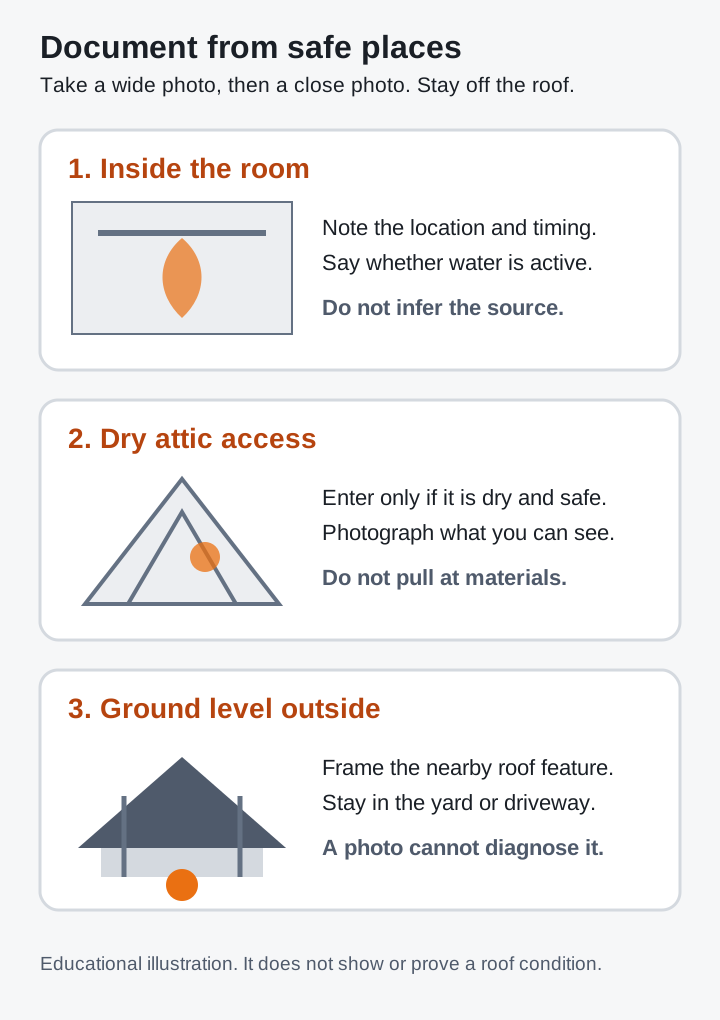
Start with notes and photos you can take safely. Notice the location, timing, and a wide-to-close photo sequence. These observations do not prove the leak source, roof condition, repair scope, insurance coverage, or need for replacement.
Take photos from safe places
A few useful photos can save time when you request an assessment. Use normal lighting and take a wider shot before a close-up.
| Safe place to stand | What to photograph | What it may help explain | What it does not prove |
|---|---|---|---|
| Inside the room | The full ceiling or wall, then the stain or drip area | Location, size, and whether the finish looks changed | The point where water entered the roof |
| Attic access, if it is dry and safe to enter | A wide view of the area below the roof, then visible staining | Whether there is an interior observation near the roof structure | The cause, age, or full extent of a problem |
| Ground level outside | The roof edge, gutter line, chimney, skylight, or vent from below | The exterior area closest to the concern | A missing shingle, failed flashing, or leak source |
| Driveway or yard after weather has passed | Fallen branches or other visible debris from a safe distance | A reason to mention a recent event | Damage to the roof or a need for replacement |
Do not pull at shingles, scrape sealant, or remove debris from a roof surface to get a better picture. If you cannot get a useful photo safely, send the request without one.
Four places to mention, not inspect up close
Water can show up inside some distance from where it entered. These are useful landmarks to name in your notes, not a checklist for climbing onto the roof.
1. Vents and plumbing pipes
If the concern is near a bathroom, laundry area, or kitchen, note whether there is a roof vent or plumbing pipe above that part of the home. A contractor can decide what needs closer inspection.
2. Chimneys and skylights
Take a ground-level photo that shows the feature and the nearby roof area if you can do so safely. A photo helps locate the conversation; it cannot confirm a flashing or sealant issue.
3. Valleys and roof intersections
A valley is where two roof slopes meet. From the ground, you may be able to photograph its general location. Avoid judging its condition from a distant image.
4. Gutters and roof edges
Note an overflow, visible debris, or water appearing near a wall after rain. Those observations can be relevant, but they do not establish a roof leak, drainage cause, or repair scope.
Give the contractor a clean starting point
When you contact B.K. Roofing & Remodeling, include your town, the room or exterior area involved, when you noticed the issue, whether it is active, and any safe photos. If you have previous roof paperwork, keep it nearby.
The next step should be clear: someone can review the information, explain what an on-site assessment may involve, and tell you what to do next. Nobody can reliably diagnose a roof from a single image or promise a repair scope before inspection.
Request an estimate for a non-emergency roofing concern.
Related: Roof leak repair · Roof repair or replacement? What your estimate should explain
Safety source: National Weather Service — What to Do After Severe Weather. This guide is homeowner education, not an on-site inspection, diagnosis, insurance opinion, or guarantee.
Need a roof inspection or free estimate?
We serve homeowners across Northern NJ. No pressure, no obligation.